The Human Signal: Why UK Boards Must Hear the Customer Unmediated
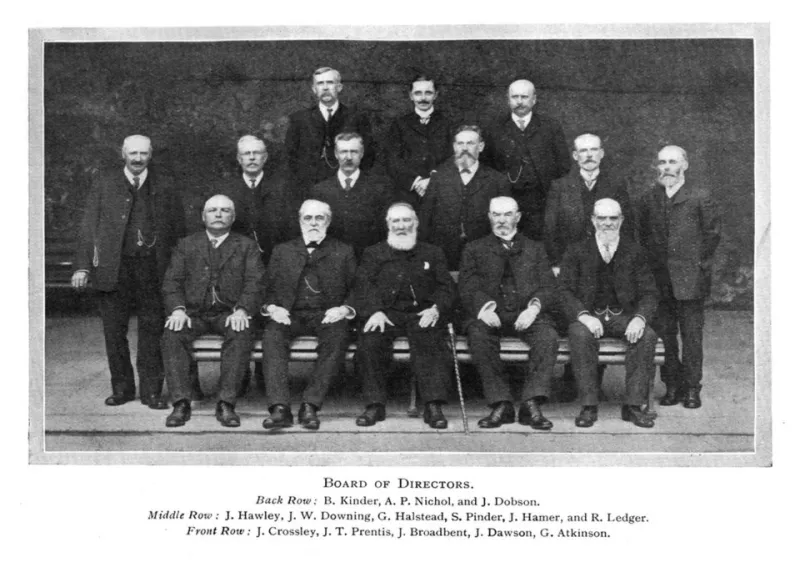
Photo: Photographer unknown, book authored by Owen Balmforth (1855-1922)., Public domain, via Wikimedia Commons
UK boards have never had so much customer data. They also have never had so many filters between the boardroom and the customer. Dashboards aggregate. Management summaries select. AI tools triage, transcribe and condense. Each filter has a legitimate purpose, but together they can create a governance blind spot: the board becomes expert in the model of the customer and unfamiliar with the customer's actual experience.
The oculus metaphor cuts both ways. A lens can magnify what matters, or it can distort what is seen. In 2026, the risk for many UK organisations is not a shortage of customer information. It is an excess of mediated information and a shortage of direct exposure.
The comfort of the aggregate
Customer metrics are essential. Net promoter scores, complaint volumes, retention rates and service-level performance give boards a stable view across time and business units. They allow comparison, challenge and trend analysis. No serious board should abandon them.
But aggregation has a cost. It smooths out the raw edge of experience. A complaint category can show a modest increase while the language inside the complaints reveals a more serious failure of fairness or clarity. A satisfaction score can remain stable while a particular group of customers quietly disengages. An AI-generated summary can capture the theme of a thousand calls and lose the sentence that would have prompted a director to ask a sharper question.
Data volume is not the same as insight. It is inventory. Insight comes from interpreting evidence, and interpretation improves when directors have some direct sense of what the evidence represents.
This is a governance risk, not a service issue
It is tempting to treat customer experience as an operational matter to be managed below board level. That is a mistake. Customer harm, conduct risk, reputational damage and operational resilience all begin in the same place: the gap between what an organisation promises and what a customer actually receives.
For regulated firms, the UK's Consumer Duty has made this relationship more explicit, but the principle is broader. Whether or not a specific regulatory regime applies, a board that sees customer evidence only through management filters is relying on the very layer it is meant to challenge. That is not a comfortable position for any director with a duty of oversight.
A lightweight discipline, not another committee
The answer is not a new customer committee. UK boards do not need more meeting bloat. They need a small, repeatable discipline that brings unfiltered evidence into the governance rhythm without turning directors into operational managers. Four components are enough.
1. A raw signal page in the board pack
Once a quarter, include a single page of verbatim customer and front-line staff evidence. Redact personal data, but keep the language. Include a small sample of complaints, call transcripts or service messages, chosen to illustrate a theme rather than to prove a point. The page should carry a short management note explaining what the evidence suggests and what is being done about it. It is not a dashboard. It is a window.
2. Executive immersion with a reporting obligation
Each executive should spend at least half a day a quarter in a customer-facing operation. The visit should not be a staged tour. It should involve listening to calls, observing a service interaction or sitting with a front-line team. The obligation is to report one surprise and one decision at the next executive meeting. This turns exposure into management action rather than a pleasant outing.
3. A rotating board observer
One non-executive director per quarter should listen to customer calls or visit a service site, then report briefly at the next board meeting under a standing agenda item on customer signal. Ten minutes is sufficient. The purpose is not to inspect the operation but to calibrate the board's understanding of the evidence it receives.
4. A staff voice channel
Front-line staff are often the earliest warning system. A short, regular session in which directors hear from staff without their managers present can surface patterns that customer metrics miss. It must be safe, confidential and clearly separate from performance management.
Guardrails: anecdote is not data
Direct exposure has a known risk: the vivid story can overwhelm the representative dataset. Directors should treat individual accounts as hypotheses, not conclusions. The discipline works when raw evidence is triangulated with aggregate metrics and management analysis. The question is not 'Did one customer have a bad experience?' but 'Is this an isolated case or a pattern that our reporting is not capturing?'
Privacy and fairness matter. Customer and staff voices should be used lawfully, with appropriate redaction and consent where required. The aim is better oversight, not surveillance.
The boardroom test
A board can assess its own customer sightline with three questions. When did we last hear an unfiltered customer voice, rather than a summary of one? Can we trace a recent board decision to direct customer or front-line evidence? Are we hearing from the customers who do not complain, and the staff who are closest to them?
If the answers are vague, the board is governing at a distance. The remedy is not more data. It is a better line of sight. A board that hears the customer only through a dashboard may be well informed about the average and poorly informed about the risk.